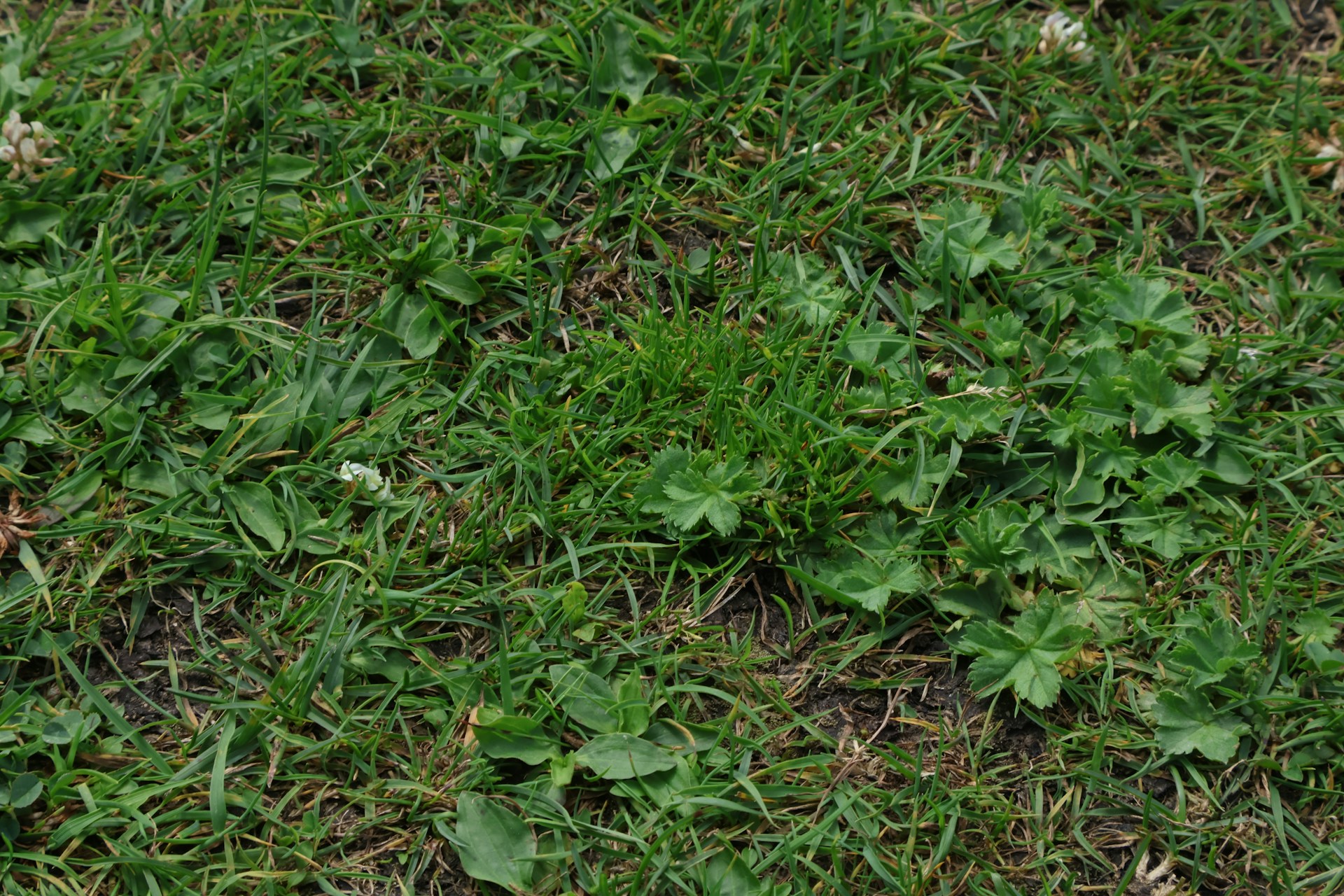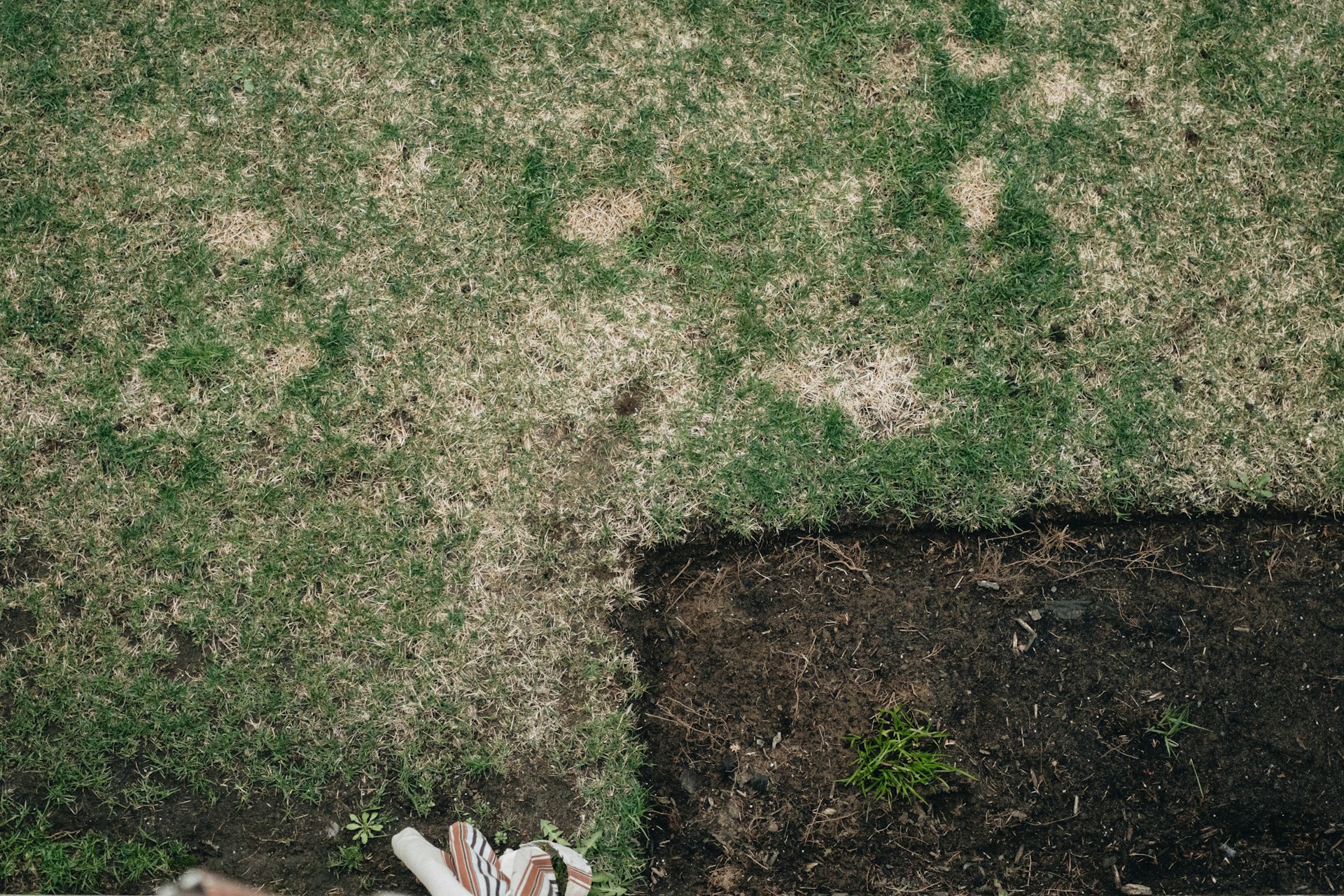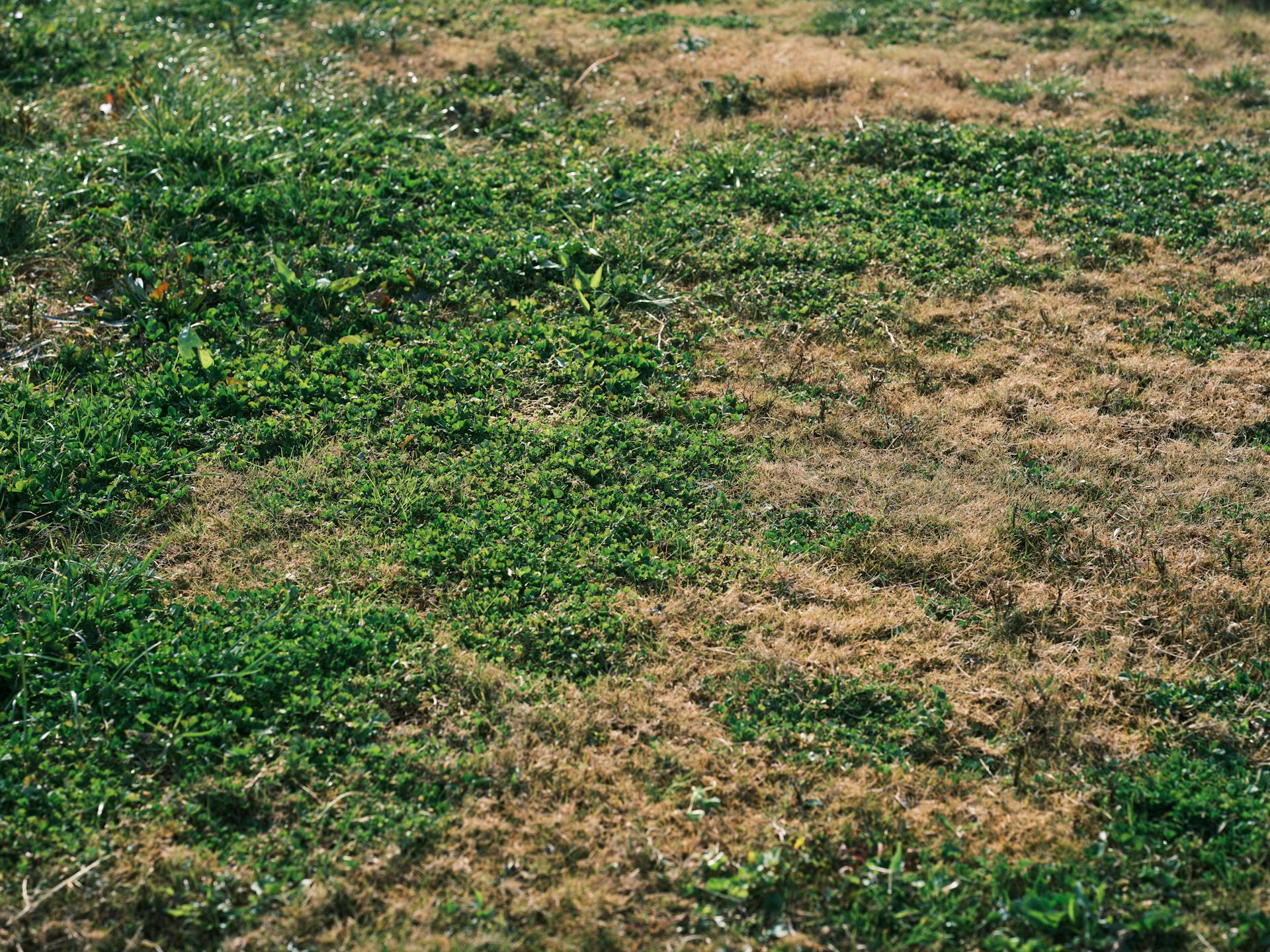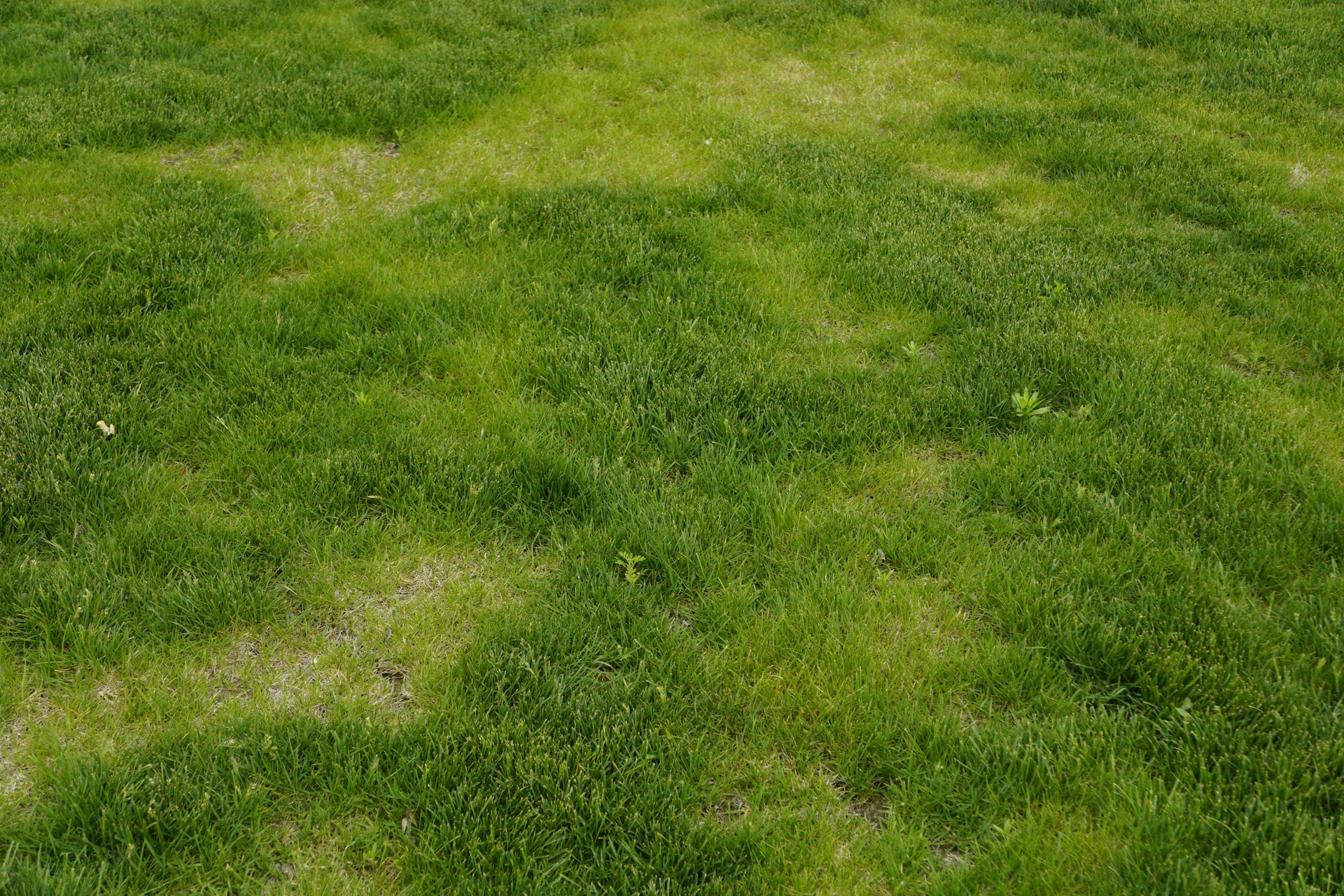
Picture the scene. Late spring, the lawn looks alright from the kitchen window, but get up close and there’s a worn-through patch near the back gate where the dog runs. A thin strip along the path where the wheelbarrow lives. A bare circle where the garden table sat all winter. None of these are catastrophic. None of them justify the six-week disruption of a full reseed.
Most lawn advice goes straight to reseeding as the answer to any patchy area. Reseeding works, but the process is genuinely disruptive: kill the existing grass in the affected zone, prepare the soil, sow seed, water daily for three weeks, keep traffic off the area for another two weeks, watch the new grass struggle to match the surrounding colour for another month. That’s six to eight weeks of looking worse before it looks better.
For shallow problems, there are faster routes that produce real results in days rather than weeks. Worth understanding which problem you actually have before choosing the fix.
Working out what’s causing the patches
Patchy lawns come from a handful of root causes, and the right repair depends on which one you’re dealing with.
Compaction. Foot traffic in the same spots, dogs running consistent routes, garden furniture sitting for months. Grass roots can’t penetrate compressed soil, so the grass thins and then dies. Test by pushing a screwdriver into the patch — if it resists more than the surrounding healthy lawn, compaction is your issue.
Drought stress. South-facing slopes, areas near walls that reflect heat, spots where the soil drains too fast. Test by watering the patch heavily for a week. If new green growth appears, drought was the cause and you’ve solved it.
Shade. Patches under trees, on the north side of fences, in areas that get less than four hours of direct sun. The grass type simply can’t cope. Test by observing — does the patch get any real sun, or is it shadow most of the day?
Dog urine. Concentrated patches of yellow then bare ground, often near where the dog routinely goes. The nitrogen burn kills the grass and the soil chemistry takes time to recover. Test by smelling or by watching the dog.
Old furniture or storage. Anything that sat on the lawn for months. The grass underneath died without light. Once removed, the patch is bare soil but the surrounding soil is generally healthy.
Heavy thatch in surrounding lawn. The patches aren’t separate problems — the rest of the lawn is choking and these are the first areas to give up. Test by checking thatch depth across the whole lawn, not just the patches.
Compaction, drought, and old furniture have repair paths that don’t require reseeding. Shade and dog urine need different strategies. Thatch problems need the broader renovation approach, not patch repair.
The aeration and feeding route
For compaction-caused patches, you don’t need new seed. The existing grass roots in the patch (and around its edges) want to grow back — they just can’t penetrate compressed soil. Help them.
Buy or borrow a hollow-tine fork or a garden fork. For the affected patches, push the tines in to about 7-10cm depth, every 8-10cm across the patch. Don’t worry about being precise; you’re trying to break up the compaction layer and create air pockets in the soil. Pull the fork out cleanly. The patch will look like it’s been deliberately damaged — that’s fine.
If you’ve got the hollow-tine fork that removes plugs of soil (better tool for the job), spread some sharp sand or fine compost across the patch and brush it into the holes. This keeps the holes open and provides better soil structure.
Then feed. A balanced lawn feed — Westland SafeLawn, Aftercut All In One, or whatever you’ve got — applied to the aerated patches at the recommended rate. Water in well.
Two to three weeks later, you should see the surrounding grass growing into the patch and the existing thinned grass thickening up. The patch fills from the edges in. Within a month it’s often unrecognisable.
This works because grass spreads via stolons and rhizomes (depending on the species) — runners that extend horizontally underground. Given air, water, and nutrients, the surrounding healthy grass will populate the patch on its own. Reseeding skips this natural process; aerating accelerates it.
The watering reset
For drought-stressed patches, the fix is so simple it’s almost embarrassing. Water properly for two weeks.
“Properly” means three things. First, deep watering rather than light sprinkling. The patch needs water reaching the root zone (10-15cm down), not just dampening the leaf blades. A lawn sprinkler on the patch for 30-40 minutes every other day produces deeper soaking than 10 minutes daily. Second, early morning or late evening — water during the day evaporates before it penetrates. Third, two weeks minimum — drought damage doesn’t reverse in three days.
If the patch greens up during this period, you’ve confirmed drought as the cause and you’ve fixed it. The longer-term question is why this area dried out faster than the rest. Usually it’s one of: soil structure (sandy, drains too fast), aspect (south-facing, more direct sun), or a microclimate quirk (next to a wall or paving that reflects heat).
For chronic dry patches, working some compost into the surface over a couple of years gradually improves water retention. Doesn’t solve it overnight but compounds.
Brushing in compost or topdressing
For patches caused by old furniture, storage areas, or anywhere bare soil has been compacted, a topdressing-only approach often works without any seed.
The technique: brush a thin layer (1-2cm) of quality lawn topdressing — equal parts good compost, sandy loam, and sharp sand if you’re making your own, or a bagged lawn topdressing from a garden centre — across the bare patch. Work it into the surface with a broom or back of a rake until it looks like flat soil rather than a mound.
Water it in. Two weeks later, the surrounding grass will be sending runners into the loose topdressing. Within a month or so, the patch fills in from the edges.
This works best for patches under about 30cm across. For anything bigger, the centre is too far from the surrounding grass for runners to reach quickly, and reseeding becomes more practical.
Dog urine patches
These need a slightly different approach because the soil chemistry is the problem, not the grass itself.
First, flush the area with water. A heavy soaking for three or four days dilutes the concentrated nitrogen and salts that killed the grass. Don’t skip this step — patching seed into chemically burnt soil produces another dead patch.
Second, top up with topdressing as above. The grass surrounding the patch will recolonise the spot via runners over 4-8 weeks.
Third, manage the source. If the dog uses the same spot repeatedly, the patch will return. Either redirect the dog with training and an alternative spot, or accept that the lawn near that area will always be a problem and adjust expectations.
Patch repair products marketed for dog urine damage (lawn rescue formulas, etc.) are mostly grass seed with a coloured marker dye and a bit of fertiliser. They work, but they’re expensive per square metre compared to buying topdressing and ordinary seed. Skip them unless you want the convenience.
When patch repair isn’t enough
Some patches genuinely need reseeding. The honest signs:
- Patches larger than about 50cm across with no surrounding healthy grass
- Areas where the soil itself is poor (heavy clay that hasn’t been amended, builder’s rubble underneath)
- Lawns where the patches are growing rather than shrinking — indicates a continuing underlying problem
- Patches caused by underlying issues like leatherjackets or chafer grubs that haven’t been addressed
For these, our guide on bare patches in your lawn covers the reseeding approach properly.
The thing that fixes patchy lawns long-term
Most patch problems aren’t one-off events — they’re symptoms of how the lawn is being managed overall. The lawn that has compaction patches now will have new compaction patches next year unless something changes.
Three habits that meaningfully reduce patchiness over time. Mow higher (30-40mm rather than the lower setting most domestic mowers default to) — taller grass shades the soil, holds moisture, and is more resilient to wear. Aerate the whole lawn annually in autumn rather than treating compaction reactively. Feed in spring and autumn rather than only when problems appear.
None of these are dramatic. All of them compound. A lawn that’s mown high, aerated annually, and fed twice a year develops a thick enough sward to resist most of the small daily wear that produces patches in lawns that aren’t managed this way.
Patch repair is the fix for what’s already gone wrong. Better habits are the fix for not having patches to repair.
For the broader rhythm of UK lawn care, our spring lawn care guide and the renovation guide cover the seasonal context. For patches that turn out to be a bigger problem, the bare patches article is the next step.