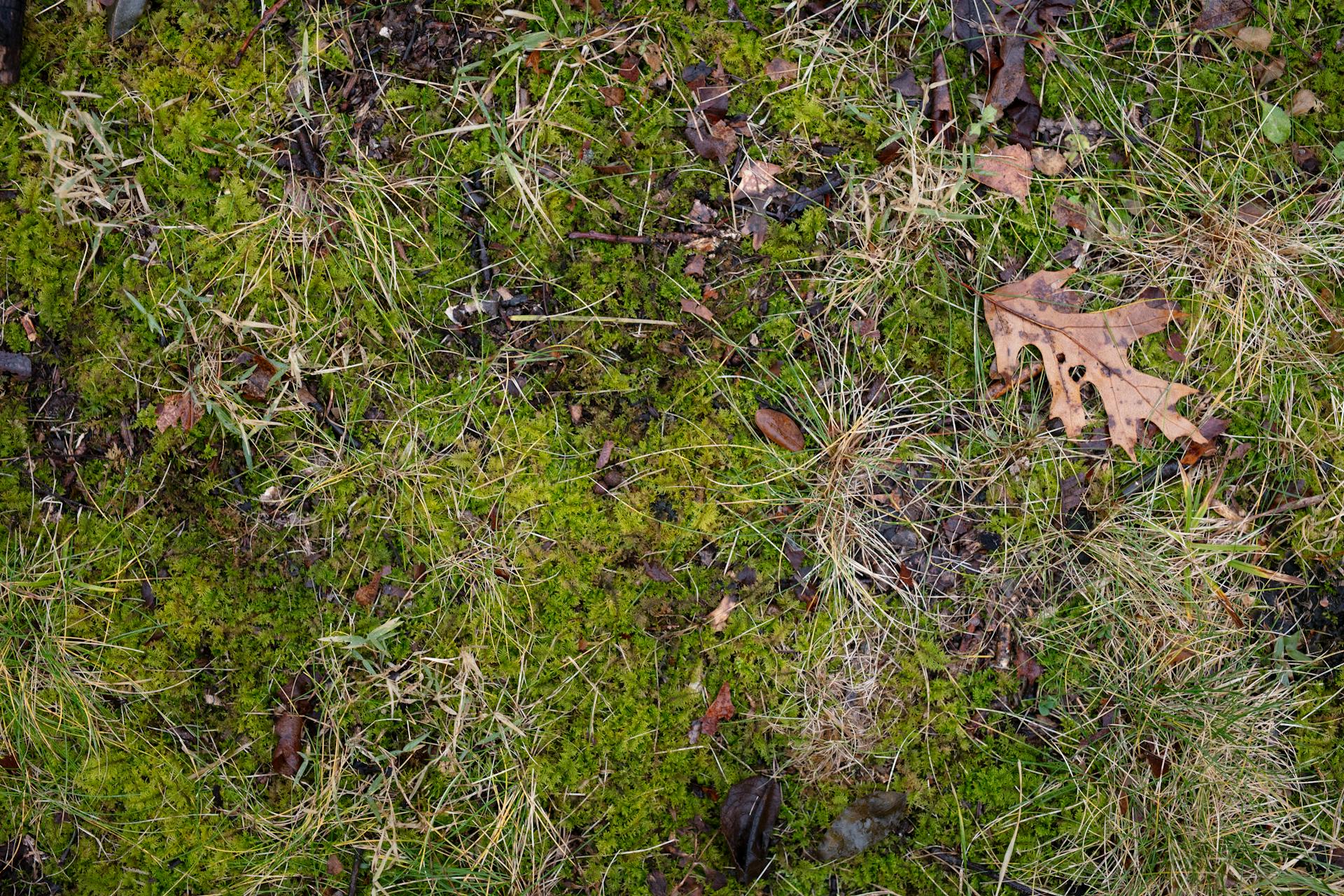
If your lawn looks more green-cushion than green-grass right now, you’re dealing with what is probably the single most common UK lawn problem. British weather, heavy clay soils, and the typical small-garden conditions of overhanging trees and compacted ground create near-perfect moss-growing conditions for most of the year.
The good news is that killing visible moss is straightforward. The harder and more important question is why moss took over in the first place, because if you don’t fix the underlying conditions, it will be back within a season.
This guide covers both halves: the immediate kill, and the structural fix that stops moss returning year after year.
Why moss takes over a UK lawn
Moss is opportunistic. It doesn’t out-compete healthy grass; it fills space where grass has already failed. Every patch of moss in your lawn is a sign that grass couldn’t grow there for one of five reasons.
Compacted soil. Heavy foot traffic, clay-based soils, and years without aeration leave grass roots unable to penetrate the soil. Moss has no real root system, so compaction doesn’t bother it.
Poor drainage. Standing water after rain suffocates grass roots within days. Moss, which absorbs water through its leaves rather than roots, thrives in saturated ground.
Shade. Most UK lawn grasses need at least 4-6 hours of direct sunlight to maintain density. Areas under trees, beside fences, or shaded by buildings struggle to maintain a thick sward, and moss colonises the gaps.
Acidic soil. Grass prefers a soil pH of 6.0 to 6.5. Below 5.5, grass weakens significantly while moss tolerates a much wider pH range. UK soils tend to drift acidic over time, particularly under conifers or where rainwater dominates over irrigation.
Mowing too short. Cutting below 25mm exposes soil to light, weakens grass roots, and creates the open conditions moss needs to establish. This is one of the most common preventable causes.
If you want a permanent fix, you need to identify which of these (often more than one) applies to your lawn. Spraying iron sulphate on a moss-infested lawn without addressing the cause is like mopping up a leak without fixing the pipe.
How to kill the moss you have now
The moss in your lawn right now needs to go before you do anything else. Killing it first lets you see the bare patches underneath, which is what you’ll be repairing in the next stage.
Iron sulphate (ferrous sulphate) is the active ingredient that actually works. It blackens moss within 24-48 hours and the dead moss can be raked or scarified out roughly two weeks later. You can buy it pure (cheapest, most concentrated) or in branded products that combine it with lawn feed.
For most UK lawns, a “feed and weed” or “moss killer plus feed” product makes sense in spring because it does two jobs at once. Westland SafeLawn (child and pet safe), MOOWY Moss Killer, and Aftercut All In One are all reliable options stocked widely in UK garden centres and online. Apply on a still, dry day with rain forecast within 48 hours, or water it in yourself.
A note on application: iron sulphate stains paving, brickwork, and clothing badly and permanently. Sweep up any product that lands on hard surfaces immediately. Wear old clothes and gloves.
After about 14 days the moss will be black and brittle. This is when you remove it, which is the bridge to fixing the underlying problem.
Removing dead moss: rake or scarify?
For small lawns or light moss infestations, a spring-tine lawn rake will pull dead moss out effectively. It’s punishing on your back and shoulders but cheap and effective on lawns under about 30 square metres.
For larger lawns, anything serious, or any lawn where you plan to renovate properly, an electric scarifier earns its cost back within a single use. Bosch, Einhell, and Flymo all make capable units in the £100-200 range that handle most domestic lawns. We’ve covered which scarifier to buy in detail in our best electric scarifiers guide.
Whichever you use, expect the lawn to look catastrophic afterwards. A properly de-mossed lawn looks more like bare earth than a garden. This is normal and necessary. The alternative is to leave dead moss in place, where it forms a thatch layer that smothers new grass growth and starts the cycle again.
Fixing the underlying cause: the structural work
This is where most UK lawn content stops, and it’s where the actual long-term fix lives. Once the dead moss is out, address whichever of the original five causes apply to your lawn.
For compacted soil: Aerate. A hollow-tine aerator removes plugs of soil and creates space for grass roots and water. Manual aerators are fine for small lawns; petrol or electric machines make sense for larger areas. Aim to aerate in autumn ideally, but late spring works for moss-recovery purposes.
For poor drainage: After aeration, top-dress with a sandy lawn dressing to fill the holes and improve soil structure over time. This is a multi-year project on heavy clay, but it works. Severe drainage problems may need a French drain or similar structural intervention.
For shade: Be realistic. Some areas under mature trees will never sustain a dense lawn. Either accept moss as a low-maintenance ground cover in those spots, or replace with shade-tolerant alternatives like ferns, hostas, or a dedicated shade-grass mix. The “magic shade-tolerant lawn seed” sold by some brands works marginally better than standard mixes but isn’t a miracle.
For acidic soil: Test your soil pH with a basic kit (around £10) before treating. If the reading is below 5.5, apply garden lime according to the bag instructions. Don’t lime by guesswork; over-application creates its own problems.
For mowing too short: Raise your mower height. For UK family lawns, a cut height of 30-40mm is appropriate for most of the growing season, dropping to 25-30mm in peak growth and rising to 40-50mm in drought. Bowling-green cut heights only work on bowling-green-grade grass with bowling-green-grade maintenance.
Reseeding the bare patches
After de-mossing, your lawn will have visible bare patches where moss had been hiding the absence of grass. These need overseeding.
Use a UK-appropriate seed mix matched to your conditions. For most family lawns, a hard-wearing rye-fescue blend gives the best balance of durability and appearance. The Grass People, Boston Seeds, and Johnsons all sell quality UK-grown mixes online and through garden centres.
Sowing rate for overseeding is typically 25-35g per square metre. Rake the soil surface lightly, scatter seed evenly, top-dress with a thin layer of lawn topsoil or compost, and water gently. Keep the surface moist for the 10-14 days germination takes.
We’ve gone deeper on seed choice and overseeding technique in our best lawn seed for UK gardens guide.
When to do all this
Timing matters. Two windows work in the UK calendar:
Spring (March to early May): Soil is warming, rainfall is reliable, and grass is actively growing. The downside is that moss has had all winter to establish, so you’re working from a worse starting position. Best for moderate moss problems.
Autumn (September to mid-October): Soil is still warm from summer, rainfall returns, and moss has typically retreated through summer. Work done in autumn has all the cool, damp conditions of winter to establish before next year’s growing season. Best for serious moss problems and proper renovations.
Avoid attempting any of this in summer drought conditions or in winter waterlogging. The grass needs to be actively growing for any of this to work.
What we’d skip
A few approaches widely recommended that are honestly a waste of money or effort:
Lawn sand alone, with no follow-up. Lawn sand is a moss-killer-plus-feed product. It works, but if you stop there, you’ve achieved nothing structural.
Premium “moss prevention” products applied year-round. None of these work if the underlying causes aren’t addressed. Save the money.
Replacing the lawn entirely “because it’s just easier.” Returfing a lawn that has compaction or drainage problems means you’re laying expensive new turf onto the same conditions that killed the last lawn. Fix the structural issues first or you’ll be doing this again in three years.
The realistic timeline
If you’re starting from a moss-dominated lawn this spring, expect:
- Week 1: Apply moss killer, wait
- Week 3: Scarify or rake out dead moss
- Week 3-4: Aerate, top-dress if needed, address pH if needed, overseed bare patches
- Weeks 4-8: Light watering, no foot traffic on seeded areas, first cut once new grass is 7cm tall
- Week 8 onwards: Normal maintenance, regular feeding, raised mowing height
The lawn won’t look its best until late summer or early autumn. By next spring, if you’ve done the structural work properly, the moss should be substantially reduced rather than back to where it started.
This is the difference between treating moss and fixing the lawn. The first is a chore you do every year. The second is a project you do once.