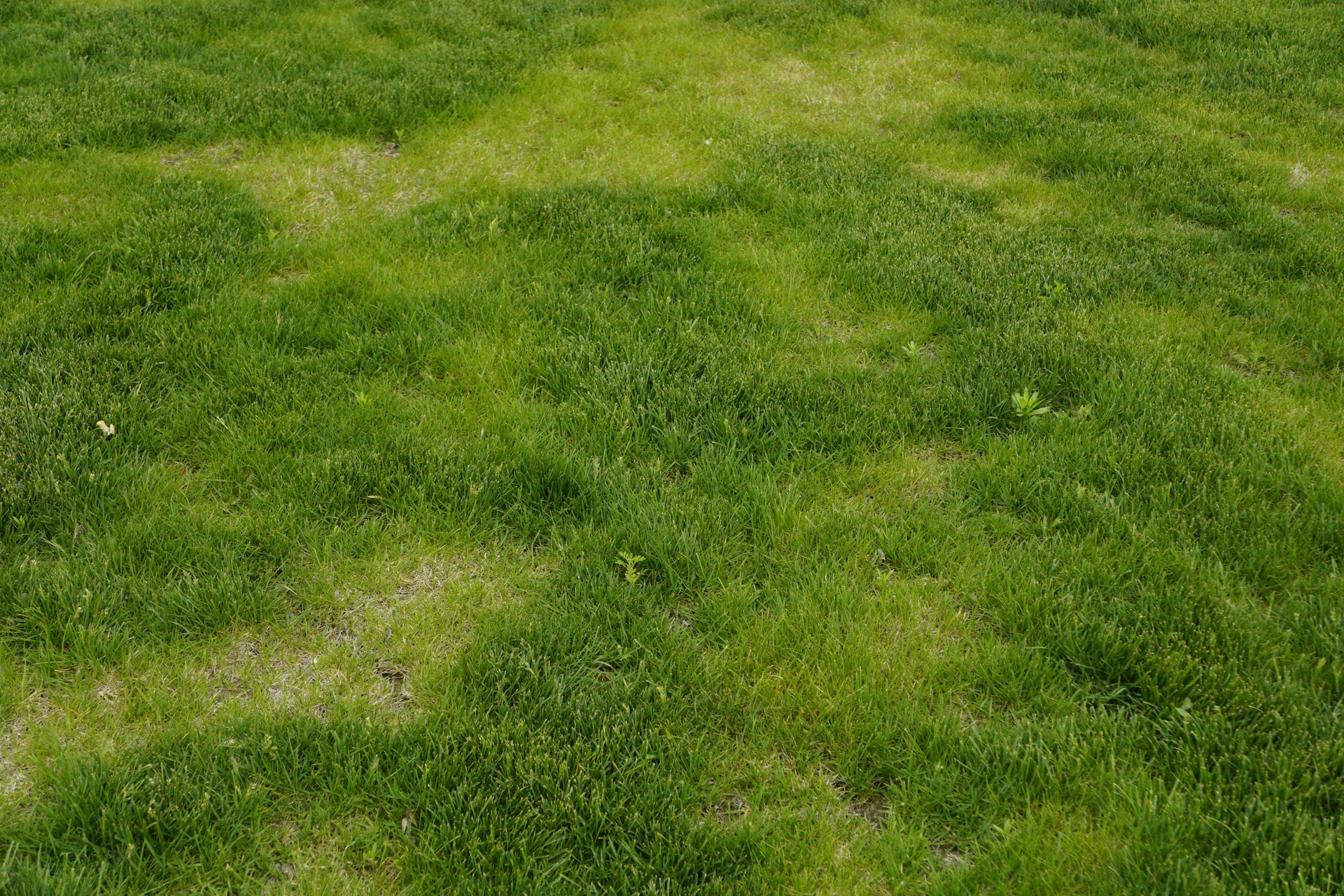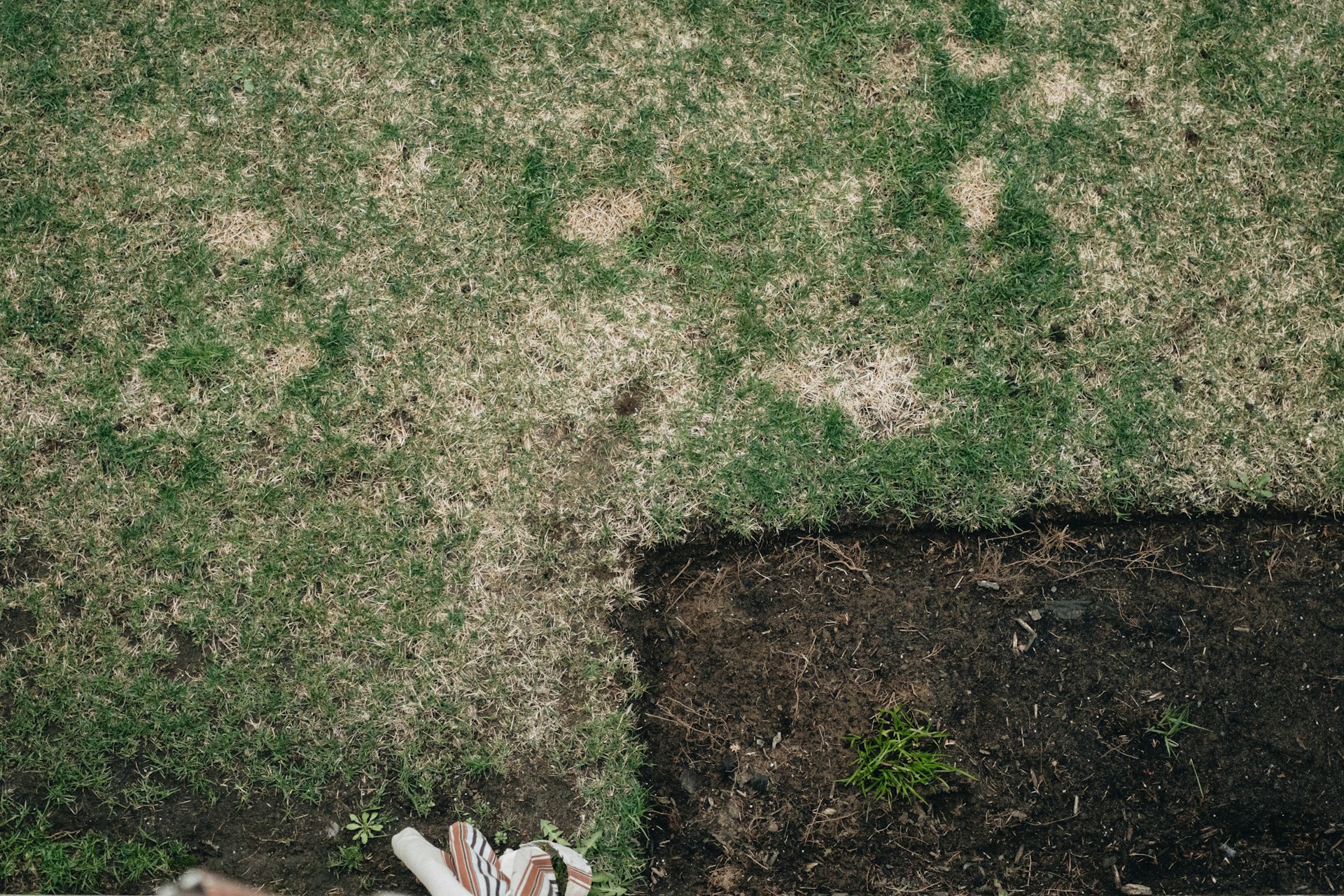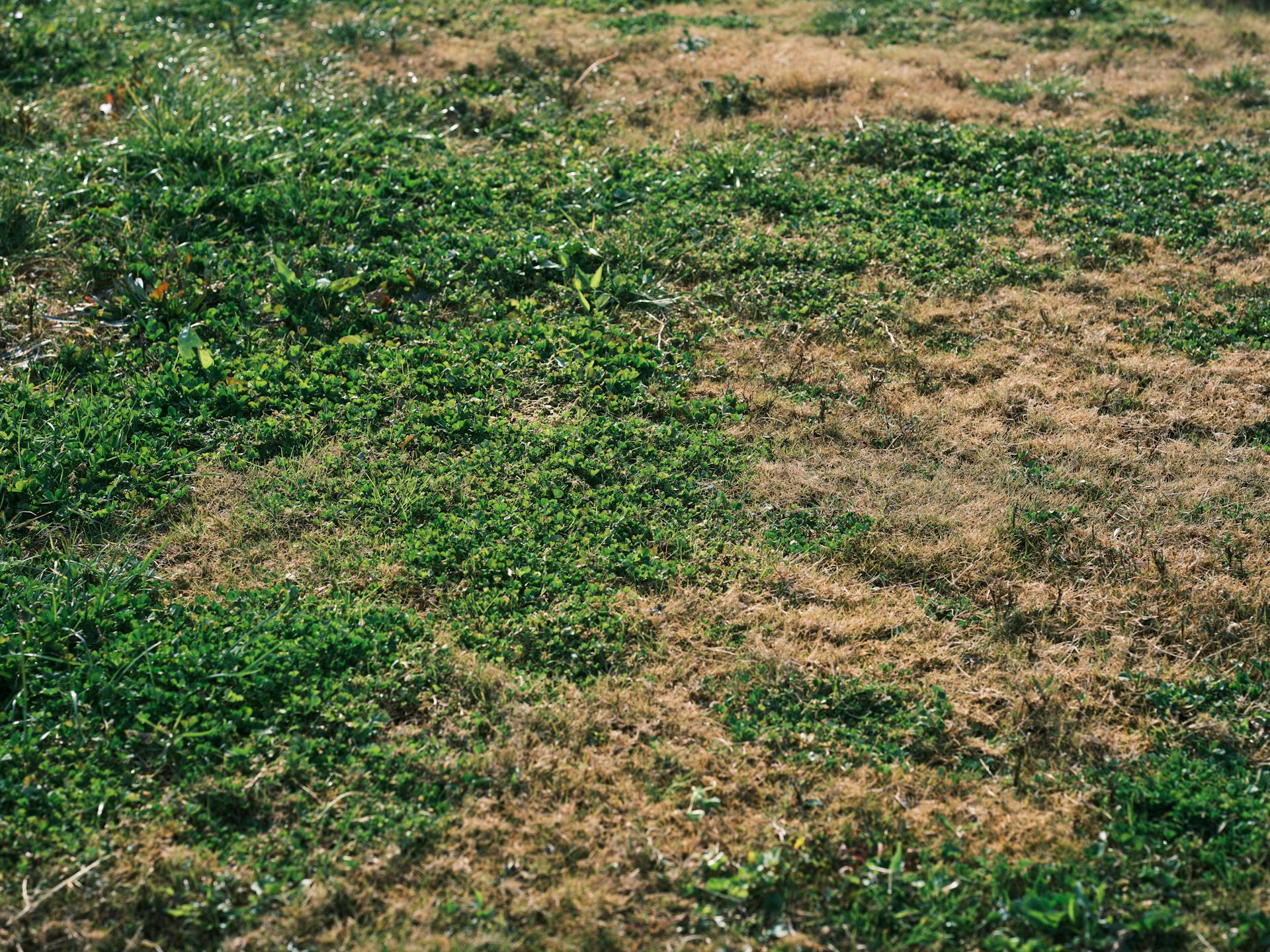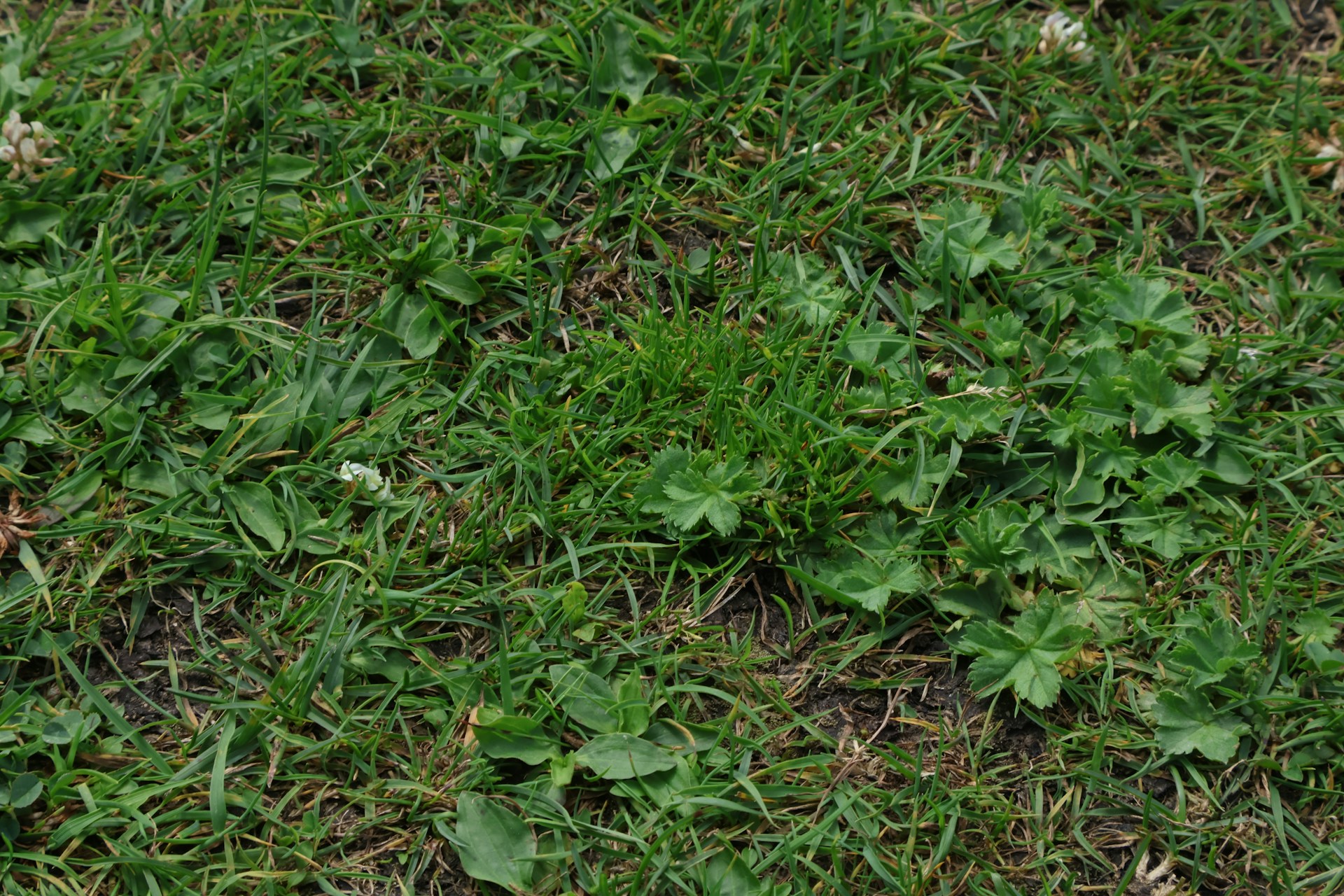
A weed-dominated lawn isn’t necessarily a failed lawn. It’s a lawn that’s lost the competitive balance between grass and other plants, and that balance can be restored. The question is how — and the right answer depends on which weeds, how severe the infestation, and what you want the lawn to be afterwards.
This guide covers identifying the main UK lawn weeds, choosing the right treatment approach, and the step-by-step recovery process from weed-dominated lawn to grass-dominated lawn.
Why grass loses to weeds
Healthy, dense grass outcompetes most weeds without intervention. Weeds dominate a lawn when grass has been weakened, soil has changed, or maintenance has stopped reinforcing grass dominance. Common causes:
- Mowing too short. Cutting below 25mm exposes soil to light, weakens grass roots, and lets weed seeds germinate
- Compacted soil. Grass roots struggle while shallow-rooted weeds thrive
- Low nutrient levels. Underfed grass thins; weeds fill the gaps
- Poor drainage. Drowns grass while many weeds tolerate wet conditions
- Drought. Kills grass and exposes seedbed for weeds when rain returns
- Damage from previous interventions. Aggressive scarifying or chemical burns leaves space for weeds before grass recovers
Identifying the cause matters because eliminating weeds without addressing why grass is losing means weeds return within a season.
Identify what you have
Different UK lawn weeds need different treatment approaches. The most common:
Dandelion. Tap-rooted perennial with yellow flowers and distinctive lobed leaves. Hand-pullable on small scale, but the tap root regrows from any fragment left in soil. Selective weedkiller works well.
Daisy. Low-growing perennial with white flower heads on short stems. Spreads slowly through runners. Tolerates close mowing better than most grass — heavy daisy presence often signals over-mowing.
Plantain (broad-leaved or ribwort). Distinctive flat rosettes of broad oval leaves. Common on compacted soil — heavy plantain presence signals soil structure problems. Selective weedkiller effective.
White clover. Low-growing trailing plant with three-leaved structure and white flower heads. Indicates low nitrogen levels. Whether to treat depends on preference — some lawns are better with clover, some without.
Creeping buttercup. Yellow-flowered perennial spreading aggressively through runners. Indicates wet, poorly drained soil. Difficult to control without addressing drainage.
Self-heal. Purple-flowered low-growing perennial common in cool, damp lawns. Spreads through runners. Selective weedkiller effective but problem usually returns without addressing damp conditions.
Yarrow. Feathery-leaved perennial with white flower clusters. Drought-tolerant — appears on dry, infertile soil. Heavy yarrow signals poor soil fertility.
Annual meadow grass. Pale green grass with seed heads. Technically a weed grass that competes with desired grass. Hard to control selectively because it’s still a grass.
Mosses. Not strictly weeds but treated similarly. We’ve covered moss specifically in our moss in lawn UK guide.
If you can’t identify what you have, take photos and compare to RHS plant identification or use a plant ID app. Treatment depends on accurate identification.
Treatment approach by severity
The right recovery strategy depends on how much of the lawn is weeds rather than grass.
Light infestation (under 15% weeds). Targeted spot treatment. Hand-weed dandelions and other tap-rooted weeds, spot-spray clover and creeping weeds with selective weedkiller. Continue normal lawn maintenance. The grass will recolonise treated areas within a season.
Moderate infestation (15-40% weeds). Whole-lawn selective weedkiller application followed by reseeding thin areas. Then sustained maintenance to keep weeds out — proper mowing height, regular feeding, addressing whatever caused the weakening originally.
Heavy infestation (40-70% weeds). Two-step process: kill all weeds, then renovate the lawn. The lawn will look catastrophic before it looks good. Plan for a full season of recovery.
Severe infestation (over 70% weeds). Consider whether renovation is economical compared to full reseed. Sometimes starting over is faster than recovering. Glyphosate-based total weedkiller followed by reseeding is the brutal but effective approach.
Step-by-step recovery for moderate to heavy infestations
For lawns where weeds dominate visibly but grass is still present, the recovery sequence is:
Step 1: Mow the lawn before treating. Cut to normal height (around 30mm) a week before any chemical treatment. This removes flowering weed heads (preventing seed spread) and improves chemical contact with weed leaves. Don’t mow within 4-5 days of applying weedkiller.
Step 2: Apply selective lawn weedkiller. UK options include Resolva Pro, Weedol Lawn Weedkiller, and Verdone Extra. Selective weedkillers kill broadleaf weeds while leaving grass alive. Apply on a still, dry day with no rain forecast for 24 hours. Coverage matters — use a watering can with a fine rose or a knapsack sprayer for even application.
Most selective weedkillers need 2-3 weeks to fully kill weeds. Don’t treat the lawn again during this window.
Step 3: Wait and observe. After 2-3 weeks, assess what’s died and what hasn’t. Some weeds (creeping buttercup, perennial weeds with deep roots) may need a second application. Some (annual meadow grass, certain mosses) won’t be affected by selective weedkillers and need different approaches.
Step 4: Address bare ground. When weeds die, they leave bare patches. These need filling before new weeds colonise. Light raking to expose soil, then overseeding with appropriate mix at 30-50g per square metre. We’ve covered overseeding in detail in our bare patches in lawn guide.
Step 5: Feed the grass. A balanced lawn feed at this point gives grass the resources to thicken and outcompete any new weed germination. Spring or summer feed depending on timing — covered in our best lawn feed for UK gardens guide.
Step 6: Maintain dominance. Recovery doesn’t end at the weedkiller application. Sustained good maintenance prevents weeds returning:
- Mow at proper height (30-40mm for family lawns, never below 25mm)
- Feed 2-4 times per year
- Keep watering deep and infrequent rather than light and frequent
- Address compaction with annual aeration
- Test soil pH every few years
- Top-dress occasionally to improve soil structure
The cycle that produces weed-dominant lawns takes years. Reversing it takes a season of focused work plus sustained maintenance afterwards.
Approach for severe infestations
When weeds dominate over 70% of the lawn, selective weedkillers leave you with a mostly-bare lawn surface that immediately re-weeds. The economical approach is starting over.
Option 1: Total kill and reseed.
Apply glyphosate-based total weedkiller (Roundup or supermarket equivalent) to the entire lawn. This kills everything — weeds and grass. Wait 3-4 weeks for full kill. Rake out dead vegetation, cultivate the soil to 5-10cm depth, level the surface, and sow new lawn seed at 50g per square metre.
Total reseed timing matters: do it in autumn (best — soil warm, rainfall reliable) or late spring (acceptable — but watering becomes critical). Avoid summer.
Option 2: Total kill and returf.
Same kill process, but instead of seeding, lay new turf. More expensive (£600-1,000 in materials for 100sqm versus £30-50 for seed) but immediate results.
Option 3: Accept it as wildflower meadow.
For lawns being asked to do little — back gardens used rarely, large rural plots — converting to managed wildflower meadow rather than recovering as lawn produces a different but valid result. Different maintenance entirely (cut once or twice a year rather than weekly), but less work overall.
Specific weed problems
A few weeds need specific approaches outside the general framework.
Creeping buttercup. Selective weedkiller kills the visible plants but the runners often regenerate. Often signals drainage problems. Address drainage (aeration, sandy top-dressing, structural drainage if severe) alongside chemical treatment. Repeated applications across multiple seasons may be needed.
Annual meadow grass. A grass that competes with desired grass. No selective weedkiller distinguishes it from lawn grass effectively. Best approach: maintain conditions that favour desired grass (proper mowing height, good feeding, regular overseeding with quality mix) and accept some annual meadow grass as part of the mix.
Yarrow. Drought-tolerant. Fix the underlying soil fertility problem (regular feeding, top-dressing to improve soil structure) and yarrow dies back as desired grass thickens. Selective weedkiller works but is treating symptom not cause.
Clover (white). Genuine choice point. Clover fixes nitrogen in soil, supports pollinators, stays green in drought, and creates a low-maintenance lawn. Many UK gardeners now actively keep clover in lawns. If you don’t want it, selective weedkillers containing clopyralid or fluroxypyr work; if you accept it, do nothing.
What we’d skip
A few weed-treatment approaches we’d avoid:
Iron sulphate as a “weed killer.” Iron sulphate kills moss reliably. It does very little to most broadleaf weeds. Don’t apply it expecting weed control.
Vinegar or salt-based “natural” weedkillers on lawns. Vinegar damages grass alongside weeds and can sterilise soil temporarily. Salt is worse. These work on driveways, not lawns.
Pulling weeds without addressing why grass lost. Pulling 200 dandelions from a lawn doesn’t change why dandelions established there. Without addressing soil compaction, mowing height, feeding, or whatever weakened the grass, new weeds replace the pulled ones within months.
Total kill and reseed in summer. Newly sown grass can’t survive UK summer drought without obsessive watering. Save total renovation for autumn or late spring.
Using lawn weedkiller on persistent perennial weeds in beds. Selective lawn weedkillers will damage many garden plants. Use total weedkillers (glyphosate) for non-lawn applications, and apply carefully to avoid drift onto lawn.
The structural difference between weed-dominated and grass-dominated lawns is usually maintenance rather than starting position. A lawn that’s been mown correctly, fed regularly, and aerated occasionally rarely becomes weed-dominated even on poor soil. A lawn that’s been neglected for years becomes weed-dominated regardless of starting quality.
Recovery is possible. Sustained maintenance afterwards is what makes recovery permanent.