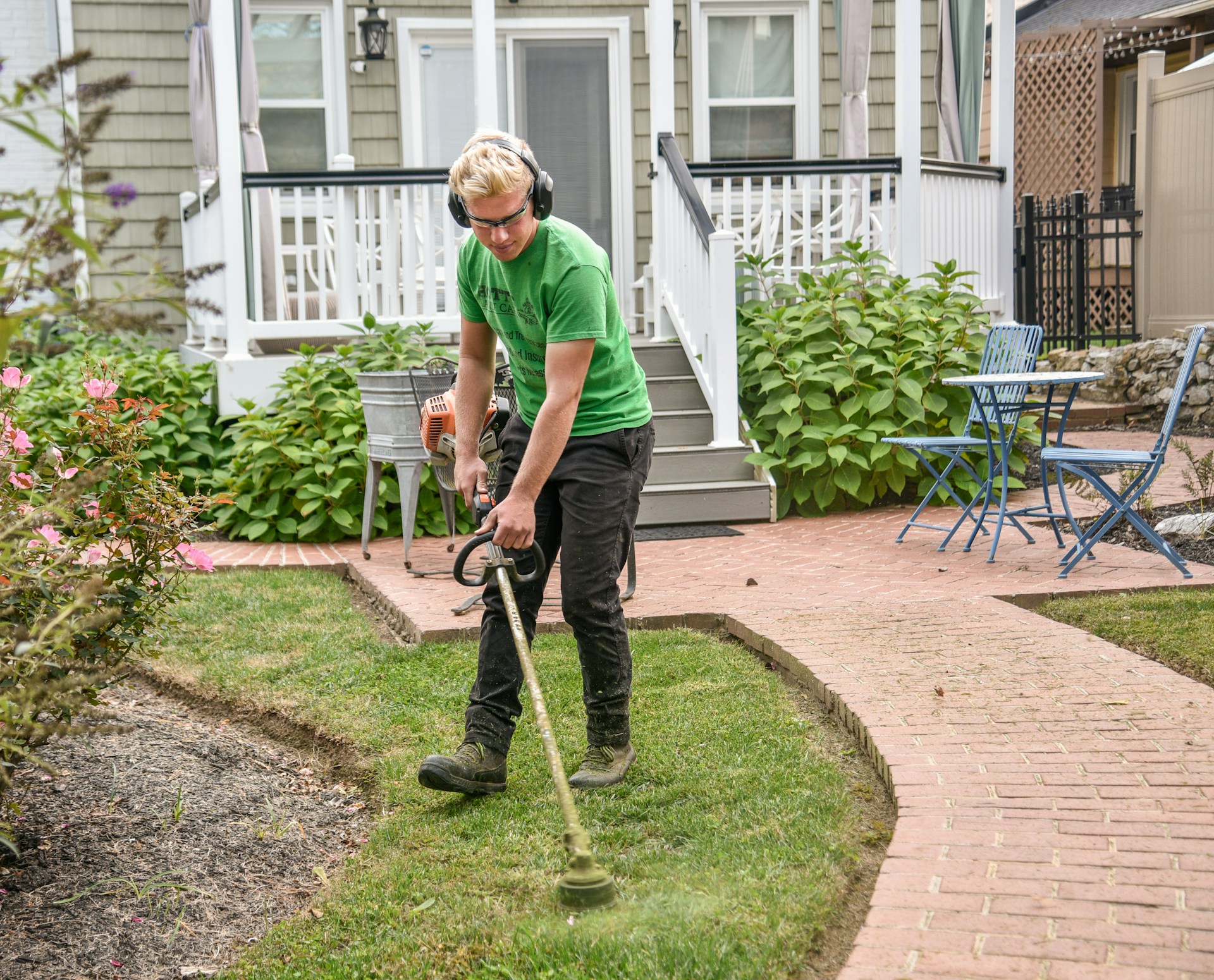
A strimmer is the tool that finishes off what the lawn mower can’t reach — edges, around obstacles, against fences, in awkward corners. It’s also the tool most homeowners undervalue, buying the cheapest available and replacing it every two years when it fails. Spending slightly more once produces a tool that works for a decade and genuinely changes how easy edge maintenance is.
Cordless strimmers have closed the gap with petrol entirely for domestic use. The right cordless strimmer is lighter, quieter, and lower-maintenance than petrol equivalents while doing the same work. The wrong one is a frustration you’ll abandon.
Quick verdict
Best overall: EGO ST1610E — 56V power, 40cm cut width, professional-grade performance at consumer price.
Best value: Bosch EasyGrassCut 18-230 — 18V, 23cm cut, fine for small gardens at low cost.
Best for existing battery platforms: Match your strimmer to your existing battery system (Bosch 18V, Makita LXT, EGO 56V, etc.) — saves significant money over buying a separate platform.
Best premium: STIHL FSA 60 R — built to last, professional-grade build, expensive but earns it over time.
Best lightweight option: Greenworks G24LT — light enough for older users or those with mobility issues without sacrificing capability.
Why strimmers matter more than people think
Most UK lawn edges show the difference between a properly maintained lawn and an averagely maintained one more clearly than the lawn surface itself. A perfectly cut lawn surrounded by ragged edges looks unfinished. A merely-acceptable lawn surface with sharp edges looks deliberate.
Strimmers handle the edges that mowers can’t reach: against walls, around tree trunks, at the base of fence posts, around shrubs and beds, along path edges. Without a strimmer, these areas grow taller than the lawn and visibly disrupt the outline. With a strimmer used regularly, the lawn looks intentional rather than struggling.
For most UK gardens, strimming once a fortnight in growing season is sufficient. Better strimmers make this a 10-minute job; worse strimmers make it a 30-minute frustration.
How to pick a cordless strimmer
Three factors matter more than the spec sheet suggests.
Battery platform compatibility. If you already use a particular cordless battery system (Bosch 18V, Makita LXT, EGO 56V, DeWalt 18V/54V, Greenworks 40V), the cheapest serious strimmer is one that uses your existing batteries. The strimmer-only purchase saves £60-100 versus buying with batteries, and you avoid the storage and maintenance burden of multiple battery types.
Cut width and head type matter for productivity. A 23cm cut handles small gardens but multiplies your time on larger ones. A 30-40cm cut completes the same edges in roughly two-thirds the time. The cut head type also matters — bump-feed line heads are reliable, fixed-line heads work but need manual adjustment, and proprietary “click” systems are convenient but tie you to specific replacement parts.
Weight and balance affect actual usability. Strimmer weight ranges from around 1.5kg (compact 18V tools) to 4-5kg (full-power 56V tools with batteries). Heavier tools are tiring across long sessions; lighter tools may struggle with thick grass. The right balance depends on how much strimming you do and your physical comfort with weighted tools held at arm’s length.
A few features that don’t matter as much as marketing suggests:
- Brushless motors. Standard now on quality tools. Worth checking, not worth premium.
- Telescopic shafts. Useful if you share the tool between users of different heights. Otherwise rarely necessary.
- Edging mode (rotating head 90°). Sounds useful but most users find dedicated edging shears or a half-moon edger produces better results for that specific task.
- Variable speed triggers. Useful for delicate work but most strimming is “full power.”
EGO ST1610E — Best Overall
EGO’s 56V platform produces cordless garden tools that genuinely match petrol performance, and the ST1610E strimmer is the strongest example. 40cm cut width, brushless motor, professional-grade construction, runtime that handles typical UK domestic gardens on a single charge.
The cut width is the standout feature. Most consumer cordless strimmers cut 25-30cm; 40cm completes large garden edges in noticeably less time. The 56V power doesn’t bog down in thick growth the way 18V and 36V tools do — strimming neglected grass that other tools struggle with feels routine.
Build quality is excellent. The shaft is rigid (no flex during sustained use), the cut head is robust, controls are well-positioned, and the overall feel is that of a professional tool rather than a domestic compromise.
Battery options range from 2.5Ah (around 25-30 minutes of typical use) through 5Ah (45-60 minutes) and 7.5Ah (70-90 minutes). Most domestic users find 5Ah covers a typical garden’s edge work in a single charge.
What works well: power, build quality, runtime, balance, the broader EGO ecosystem (mower, leaf blower, hedge trimmer all on the same battery platform).
What’s slightly disappointing: weight (around 4kg with battery) is noticeable across longer sessions, and the EGO line head’s bump-feed mechanism is occasionally finicky in heavy debris.
Price range: £180-260 with battery and charger. Buy if: Larger garden, want professional performance, particularly if you’re building out the EGO ecosystem.
Bosch EasyGrassCut 18-230 — Best Value
For small gardens with light edge work, the Bosch EasyGrassCut 18-230 is genuinely competent at a price that doesn’t justify investment in higher-tier options.
The strimmer uses Bosch’s 18V Power for All battery system, which is shared across an enormous range of garden and DIY tools. If you have any other Bosch 18V tool, the bare strimmer (no battery) costs around £55. With battery and charger, around £110.
Cut width is 23cm, which is small but appropriate for the typical small garden context where this tool fits. Power is adequate for normal edge maintenance — lawn margins, around posts, light grass on path edges. It struggles with thick or wet grass and loses power noticeably on heavy work.
Weight is the standout positive — at around 1.7kg without battery, it’s light enough for sustained comfortable use even by users who’d find heavier tools tiring.
What works well: light, easy to handle, ubiquitous Bosch battery platform, predictable results on light work, low price.
What falls short: power for thick growth, cut width on larger gardens, runtime on the standard 2.5Ah battery (typically 15-20 minutes of strimming).
Price range: £55 (bare tool) to £110 (with battery). Buy if: Small garden, light maintenance work, already use Bosch 18V tools.
Match to existing battery platforms
If you already own cordless tools, buying a strimmer on a different battery platform costs more in the long run than is obvious. Each battery platform has its own dedicated charger, the batteries don’t share, and storage becomes increasingly chaotic with multiple incompatible systems.
The major UK platforms with quality strimmers available:
Bosch 18V Power for All: EasyGrassCut 18-230 (light), AdvancedGrassCut 18V-26 (medium-power). Shared with hundreds of other tools.
Makita LXT (18V): DUR181 (compact), DUR189 (more powerful). Shared with extensive Makita LXT range.
EGO 56V: ST1610E (covered above), ST1300E (lighter alternative). Shared with full EGO outdoor tool range.
DeWalt 18V/54V FlexVolt: DCM561 (basic), DCMST575 (FlexVolt premium). Shared with DeWalt’s tool range.
Greenworks 40V: G40LT (covered below), GD40LT (more powerful). Shared with Greenworks 40V range including their cordless mower.
Stihl AK / AP systems: FSA 60 R (covered below), FSA 80 (professional). STIHL ecosystem with strong dealer support but proprietary batteries.
Whichever platform you use, check that the strimmer matches and that the batteries you have provide adequate capacity. A 2Ah battery on a 56V strimmer runs for only 15-20 minutes; a 5Ah delivers an hour of work.
STIHL FSA 60 R — Best Premium
STIHL is the brand that takes garden tool build quality most seriously. The FSA 60 R is their domestic-tier cordless strimmer, on the AK battery system shared with their other domestic cordless tools.
What you get for the premium price: serviceable construction (parts available through STIHL dealers for old tools), motor and bearing quality that justifies the brand reputation, ergonomics that show genuine attention to extended use, and the warranty/service backup that comes with the dealer network.
What you don’t get is dramatic spec sheet superiority. The cut width is 28cm, runtime is similar to other 36-volt-equivalent tools, and weight is mid-pack. The premium is for build quality and longevity, not raw performance.
For someone who’ll keep tools for 15-20 years, STIHL works out cheaper per year than less durable alternatives. For someone replacing tools every 5-7 years (the typical domestic pattern), STIHL is genuinely overpriced for the practical benefit.
Price range: £200-280 with battery and charger. Buy if: You value tool longevity and serviceability, plan to keep tools long-term, value dealer support over online ordering convenience.
Greenworks G24LT — Best Lightweight Option
For users who find heavier strimmers uncomfortable across longer sessions — older gardeners, those with mobility issues, or anyone with shoulder or arm problems — the Greenworks G24LT prioritises low weight without sacrificing essential capability.
24V platform, brushless motor, 30cm cut width, weight around 2kg with battery. The lighter weight comes from the smaller battery and lighter shaft construction; you give up some power and runtime versus heavier alternatives.
For light to moderate edge maintenance on small to medium gardens, the trade-off is genuinely worth it. Sustained strimming feels less tiring, the tool is easier to manoeuvre into awkward corners, and the reduced strain matters more than the modest power difference.
For neglected gardens, large estates, or thick grass conditions, this tool will struggle. Match it to its real use case.
What works well: weight, balance, manoeuvrability, accessible price.
What falls short: power for heavy work, runtime on the supplied 2Ah battery (around 20 minutes), narrower compatibility with the broader Greenworks 40V ecosystem.
Price range: £90-130 with battery and charger. Buy if: Lightweight matters more than maximum power, small to medium garden with normal maintenance needs.
What we’d skip
A few cordless strimmer categories we’d actively avoid:
Generic Amazon import 18V strimmers under £40. Battery quality is the largest factor in cordless tool longevity, and budget batteries fail in 1-3 years versus 5-7 for name brands. The £40 saving turns into £80-120 in replacement batteries within a few years.
Petrol strimmers for small to medium UK gardens. Petrol still makes sense for very large gardens (over 1,000sqm), professional use, or specific requirements (extreme runtime, severe terrain). For typical UK domestic gardens, modern cordless tools are easier to live with — no fuel storage, no carburettor maintenance, no two-stroke mixing, lighter, quieter, equally capable.
Combined “trimmer-edger-blower” multi-tools. Multi-tools rarely excel at any single function. A dedicated strimmer that does one job well outperforms multi-attachments at slightly lower price.
4-stroke “lightweight” petrol options. These exist but combine the worst of both worlds — petrol maintenance burden with cordless-equivalent power. Either commit to petrol’s advantages or use cordless.
Cordless models on niche battery platforms with no other tools. A great strimmer on a battery system with no compatible mower, leaf blower, or hedge trimmer creates a battery silo. Match to a platform you’ll expand.
Ongoing maintenance
Strimmer maintenance is minimal but matters for longevity:
Clean the cut head after every use. Grass debris compresses around the line spool and can prevent line feeding properly. Wipe clean with a brush.
Replace the line as needed. Most strimmer line lasts 30-60 minutes of cutting time before needing replacement. Cheap line breaks more often than premium line; the cost difference is minimal.
Check the line feed mechanism. Bump-feed mechanisms occasionally need disassembly and cleaning to prevent jamming.
Charge batteries to storage levels for winter. Lithium batteries last longest stored at around 40-60% charge rather than fully charged or fully drained. End-of-season storage at this level extends battery life by 1-2 years.
Inspect cutting head and shaft for damage. Strimmers occasionally hit hidden hard objects (stones, buried debris) which can damage cut heads or bend shafts. Catch damage early before it becomes serious.
For cordless tool ecosystem decisions and how strimmer choice fits into broader cordless garden tool planning, see our best cordless mowers under £400 guide which covers battery platforms in more detail.